
Treating Body Dysmorphic Disorder
Sun 27 Oct 9:00 AM - 11:00 AM GMT
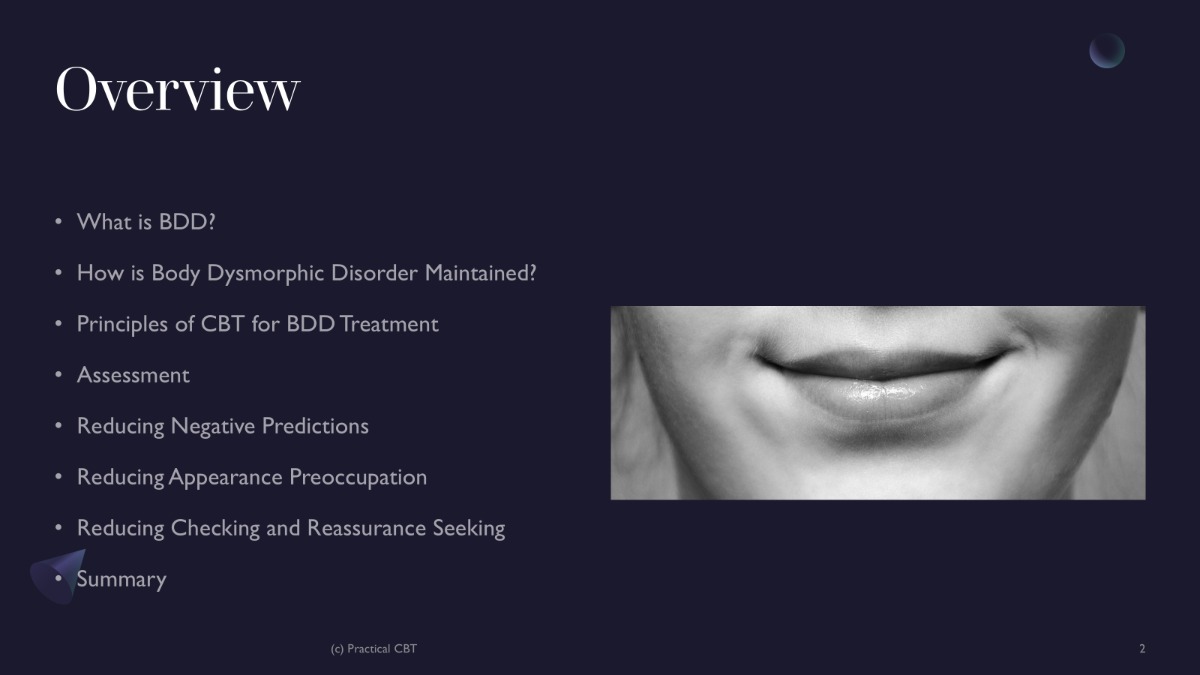
Do your clients often find themselves overly fixated on a specific aspect of their appearance? Do they perceive a particular part of their body as significantly flawed? Have they noticed that their efforts to improve or hide this area are consuming excessive time and negatively impacting their life? Do they find it challenging to accept compliments about their appearance? If the answer is 'yes' to any of these questions, they may be grappling with Body Dysmorphic Disorder. Continuing to explore "Building Body Acceptance" exercises could be beneficial for them. The focusof this webinaar is to provide insights into body image and Body Dysmorphic Disorder, delve into its potential origins, and discuss its potential effects.
Learning Outcomes
- Understand Body Dysmorphic Disorder (BDD): Participants will gain a comprehensive understanding of what Body Dysmorphic Disorder entails, including its symptoms, characteristics, and diagnostic criteria.
- Identification of Personal Patterns: Attendees will learn to recognize signs and behaviors associated with BDD within themselves or others, such as excessive focus on perceived flaws and efforts to conceal or alter these areas.
- Impact and Consequences: The webinar will highlight the negative repercussions of BDD on an individual's daily life, mental health, and overall well-being, emphasizing the importance of early recognition and intervention.
- Building Body Acceptance Strategies: Participants will be introduced to practical strategies and techniques aimed at fostering a healthier body image and promoting self-acceptance. This includes understanding the role of societal influences, challenging negative thoughts, and embracing a more balanced perspective on appearance.
- Resources and Support: Attendees will be provided with information on available resources, treatments, and support networks for individuals experiencing BDD. This will empower participants to seek appropriate help, whether for themselves or to support others facing similar challenges.
Patrick
Practical CBT
0 comments